
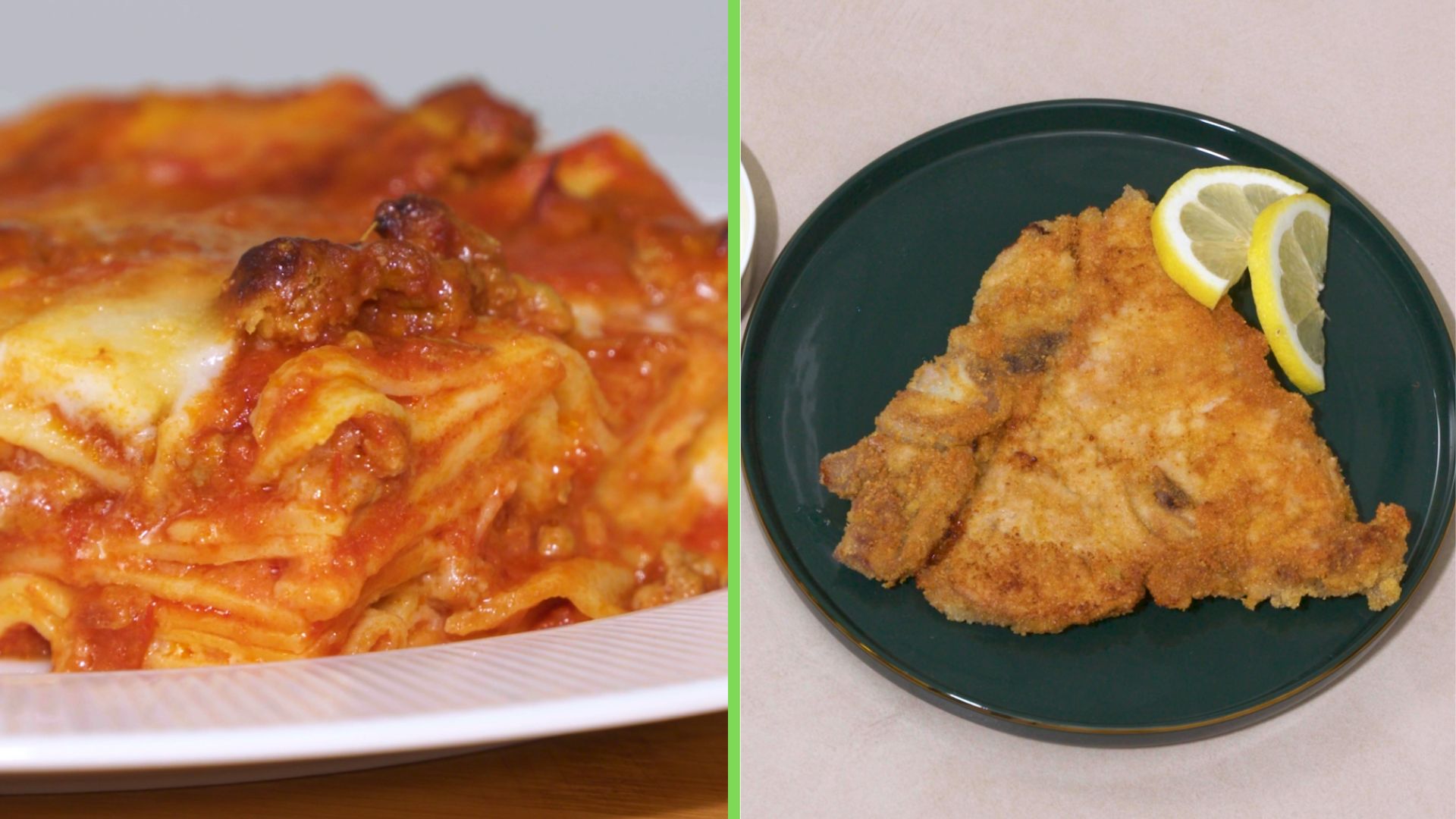
Lasagna with Ragù, Béchamel & Mozzarella
Ingredients (Serves 6-8)
For the ragù:
- 1.1 lb mixed ground meat, preferably beef and pork
- 1 carrot, finely chopped
- 1 celery stalk, finely chopped
- 1/2 onion, finely chopped
- 4 cups tomato passata
- 3/4 cup dry white wine
- 3 tbsp extra-virgin olive oil
- Salt, to taste
For the fresh pasta:
- 3 cups re-milled semolina flour, plus more as needed
- 4 large eggs
- Shortcut note: If you want to save time, you can use good-quality store-bought fresh lasagna sheets instead of making the pasta from scratch.
For the béchamel:
- 4 cups whole milk
- 7 tbsp unsalted butter
- 3/4 cup all-purpose flour
- Fine salt, to taste
- A pinch of nutmeg, optional
For assembling:
- 12 oz mozzarella, torn into small pieces
- 1 1/2 cups Parmigiano Reggiano, finely grated
- Extra ragù and béchamel, as needed for layering
Preparation
1. Prepare the ragù
- Finely chop the carrot, celery, and onion.
- Heat the extra-virgin olive oil in a large pot over medium heat.
- Add the chopped vegetables and cook until softened and fragrant.
- Add the ground meat and cook until it changes color and becomes nicely browned.
- Pour in the white wine.
- Cook uncovered for a few minutes, allowing the wine to evaporate.
- Add the tomato passata.
- Pour a little water into the passata container, shake it, and add it to the pot so nothing is wasted.
- Stir well, cover with a lid, and let the sauce cook slowly over low heat.
- Simmer until the ragù becomes rich and flavorful.
2. Prepare the fresh pasta dough
- Pour the flour onto a large work surface and form a mound.
- Make a wide well in the center, like a volcano.
- Crack the eggs into the center of the well, one at a time.
- Using a fork, start mixing the eggs while slowly incorporating the flour from the edges.
- When the mixture becomes thick, start kneading with your hands.
- Knead until the dough is smooth, soft, and elastic. (The dough should not be sticky, but it should not be dry either. It is ready when the surface is smooth, yellow, and soft, and when it gently springs back after being pressed).
- Cover the dough with a bowl and let it rest for about 30 minutes. (If using store-bought lasagna sheets, skip this step).
3. Prepare the béchamel
- Warm the milk in a saucepan.
- In another saucepan, melt the butter over medium-low heat.
- Add the flour gradually and whisk until smooth.
- Slowly pour in the warm milk while whispering/whisking constantly.
- Continue cooking until the béchamel becomes creamy and thick enough to coat a spoon.
- Season with fine salt and a pinch of nutmeg, if using.
- Set aside and let it cool slightly.
4. Roll and cook the pasta sheets
- Cut the rested pasta dough into smaller pieces.
- Flatten each piece slightly with a rolling pin.
- Pass the dough through a pasta machine, gradually rolling it thinner until it reaches the right lasagna-sheet thickness.
- Lightly flour the sheets so they do not stick.
- Bring a large pot of water to a boil.
- Add about 1 tbsp coarse salt.
- Prepare a bowl of cold water and a clean kitchen towel nearby.
- Boil each pasta sheet very briefly, just until it floats.
- Transfer the sheet immediately into cold water to stop the cooking.
- Remove it from the water, squeeze off the excess water gently, and lay it flat on the towel to dry.
- Note: If using store-bought fresh lasagna sheets, follow the package instructions. Some fresh sheets can be used directly, while others may need a quick boil.
5. Assemble the lasagna
- Preheat the oven to 350°F.
- Use a deep baking dish.
- Spread a generous layer of ragù over the bottom.
- Add a little béchamel.
- Place a layer of pasta sheets on top.
- Cover with more ragù.
- Add a generous amount of béchamel.
- Tear the mozzarella with your hands and scatter it over the layer.
- Sprinkle with plenty of Parmigiano Reggiano.
- Repeat the layers: pasta, ragù, béchamel, mozzarella, and Parmigiano.
- Continue until you have about 5 layers.
6. Finish the top
- For the final layer, add pasta sheets, ragù, béchamel, plenty of mozzarella, and a generous “waterfall” of Parmigiano Reggiano.
- Make sure the edges are well covered with sauce and béchamel so the pasta does not dry out in the oven.
7. Bake
- Bake at 350°F for about 40 minutes, or until the mozzarella has melted, the layers have come together, and the top is golden and bubbling.
- Let the lasagna cool for a few minutes before cutting. (This helps the layers stay in place and makes the lasagna easier to serve).
Serving note
This is a true Italian Sunday lunch dish: rich ragù, creamy béchamel, fresh pasta, mozzarella, and Parmigiano layered together until golden and comforting. It takes time, but once you make it, everyone will ask you to make it again.
Cotoletta alla Milanese
Ingredients (Serves 2)
For the cotoletta:
- 2 veal cutlets
- 1-2 large eggs
- 1 1/2 cups breadcrumbs
- 6 tbsp unsalted butter, plus more if needed
- Fine salt, to taste
- Lemon wedges, for serving
For the homemade mayonnaise:
- 1 large egg, preferably pasteurized
- 3/4 cup sunflower oil
- 1 1/2 tbsp fresh lemon juice
- 1 pinch fine salt
Preparation
1. Prepare the veal
- Place one veal cutlet between two sheets of parchment paper.
- Gently pound the meat until it becomes thinner and even. (The veal should be tender, but not torn).
- Season lightly with fine salt.
- Repeat with the second cutlet.
2. Prepare the breading
- Crack the eggs into a bowl.
- Add a small pinch of salt.
- Beat the eggs well with a fork until smooth.
- Place the breadcrumbs on a large plate.
- Dip each veal cutlet into the beaten egg, coating it completely.
- Press it into the breadcrumbs, making sure the entire surface is well covered. (Use your hands to help the breadcrumbs stick evenly).
3. Cook the cotoletta
- Place the butter in a large pan over low heat.
- Let it melt slowly.
- Once the butter is hot and starts to bubble, add the breaded veal cutlets.
- Cook gently until golden and crisp on one side.
- Turn the cutlets and cook the other side until golden, crunchy, and fully cooked. (The cotoletta should be crisp outside and tender inside).
- Transfer to a plate lined with paper towels to absorb any excess butter.
4. Prepare the homemade mayonnaise
- Place the egg in a tall container.
- Add the sunflower oil.
- Add the lemon juice and a pinch of salt.
- Blend with an immersion blender until thick, creamy, and smooth.
- Taste and adjust with more salt or lemon juice if needed.
- Keep chilled until serving.
5. Serve
- Serve the cotoletta hot, with lemon wedges on the side.
- Add a spoonful of homemade mayonnaise.
- Serve immediately while the breading is still crisp.
Serving note
This cotoletta alla Milanese is simple but generous: tender veal, crisp breadcrumbs, and plenty of butter for a golden crust. The homemade lemon mayonnaise adds freshness and creaminess, making it perfect as the second course after a rich Sunday lasagna.